sapui5tutors SAPUI5 • Fiori • SAP BTP Step-by-step tutorials Real project examples Interview Q&A
Practical SAPUI5 • Fiori • SAP BTP tutorials and interview prep
SAPUI5 and OData: Choosing between v2 and v4 for Optimal Performance and Functionality

SAPUI5 and OData: Choosing between v2 and v4 for Optimal Performance and Functionality

11:28:00

In the world of SAPUI5 development, the integration of OData (Open Data Protocol) is crucial for seamless data communication between the front-end and back-end systems. OData comes in two major versions - OData v2 and OData v4, each offering distinct features and capabilities. As a SAPUI5 developer, understanding when to use OData v2 and when to opt for OData v4 is essential for creating efficient, performant, and future-proof applications. In this blog, we will explore the differences between these two versions and provide examples of consuming both OData v2 and OData v4 in SAPUI5 applications.


OData v2: The Robust and Mature Option

OData v2 is the older, more mature version of the protocol. It is based on RESTful principles and supports features like filtering, sorting, paging, and batch processing. One of the significant advantages of OData v2 is its widespread adoption and comprehensive support across SAP systems. Many SAP back-end services, including SAP Gateway, primarily use OData v2.


Use Cases for OData v2 in SAPUI5:

  • When your SAP back-end system exclusively supports OData v2.
  • For applications where real-time data updates are not a critical requirement.
  • When the data model is relatively simple and doesn't require complex navigation properties.

Example of Consuming OData v2 in SAPUI5:

// Create a new ODataModel for OData v2
const oModel = new sap.ui.model.odata.v2.ODataModel("/sap/opu/odata/sap/Your_OData_Service/", {
    useBatch: false // Set this to true for batch processing support
});
// Bind data to a table
const oTable = new sap.ui.table.Table({
    visibleRowCount: 10,
    selectionMode: sap.ui.table.SelectionMode.Single,
    rows: "{/EntitySet}"
});
oTable.addColumn(new sap.ui.table.Column({
    label: new sap.ui.commons.Label({ text: "ID" }),
    template: new sap.ui.commons.TextView().bindProperty("text", "ID"),
    sortProperty: "ID",
    filterProperty: "ID"
}));
// ... other columns ...
oTable.setModel(oModel);


OData v4: The Modern and Efficient Approach

OData v4, as the more recent version, is designed with a focus on performance, simplicity, and compatibility with modern web standards. It introduces several improvements over v2, such as improved query handling and server-driven paging. OData v4 is the recommended choice for new SAPUI5 applications, especially if your back-end supports it.

Use Cases for OData v4 in SAPUI5:

For new applications or when planning a major overhaul of existing ones.
When your SAP back-end system supports OData v4 or offers a more extensive OData v4 service.
Applications requiring advanced features like deep insert, transient entities, or server-driven paging.

Example of Consuming OData v4 in SAPUI5:

// Create a new ODataModel for OData v4
const oModel = new sap.ui.model.odata.v4.ODataModel("/sap/s4hana/sap/opu/odata/sap/Your_OData_Service/", {
    synchronizationMode: "None" // Set this to "None" for better performance
});

// Bind data to a table
const oTable = new sap.ui.table.Table({
    visibleRowCount: 10,
    selectionMode: sap.ui.table.SelectionMode.Single,
    rows: {
        path: "/EntitySet",
        parameters: {
            $$groupId: "group1", // Use $$groupId for separate group processing
            $$ownRequest: true // Set this to true for individual server requests per table
        }
    }
});

oTable.addColumn(new sap.ui.table.Column({
    label: new sap.ui.commons.Label({ text: "ID" }),
    template: new sap.ui.commons.TextView().bindProperty("text", "ID"),
    sortProperty: "ID",
    filterProperty: "ID"
}));

// ... other columns ...

oTable.setModel(oModel);

Using OData v4 in CAPM Apps:

OData v4 is a modern version of the Open Data Protocol, and it plays a significant role in CAPM (Centralized Application Lifecycle Management) applications. CAPM apps are designed to streamline the process of managing applications throughout their lifecycle, from development to deployment and maintenance. Here's a short note on using OData v4 in CAPM apps:

  • Improved Performance: OData v4 offers better performance compared to its predecessor, v2. It supports server-driven paging, enabling efficient data retrieval, which is crucial in CAPM apps that deal with a large volume of application-related data.
  • Advanced Query Handling: OData v4 introduces several enhancements in query handling, making it easier to retrieve specific data sets and perform complex filtering and sorting operations. This feature simplifies data processing in CAPM apps, allowing developers to fetch relevant information effectively.
  • Compatibility with Modern Web Standards: OData v4 aligns well with modern web standards and technologies. This compatibility makes it suitable for building CAPM apps that can interact seamlessly with various front-end frameworks and platforms.
  • Support for Transient Entities: In CAPM apps, there are instances where entities may exist temporarily for processing and then discarded. OData v4 supports transient entities, which allows developers to work efficiently with temporary data, simplifying the app's overall design.
  • Simplified Code: OData v4's improved syntax and more streamlined URL conventions lead to simpler and cleaner code. This results in easier maintenance and development of CAPM apps, reducing the risk of errors and improving code readability.
  • Scalability: CAPM apps often deal with multiple applications and their respective data sets. OData v4's scalability ensures that the apps can handle growing data demands without compromising performance or stability.
  • Support for Associations and Navigation Properties: OData v4 allows developers to model associations between different entities and utilize navigation properties. In CAPM apps, this feature enables easy navigation through related data, enhancing the user experience.
  • Security Considerations: When working with CAPM apps, security is of utmost importance. OData v4 supports industry-standard authentication and authorization mechanisms, ensuring that data is accessed only by authorized users.
Choosing the right version of OData is vital for creating efficient and high-performing SAPUI5 applications. OData v2 offers a robust and mature option with comprehensive support, while OData v4 provides modern features and better performance. By understanding the unique use cases and advantages of each version, SAPUI5 developers can make informed decisions and build applications that align perfectly with their requirements and the capabilities of their SAP back-end systems.

Read more →
 SAP Modules List Overview: Unlocking the Potential of SAP's Comprehensive Business Solution

SAP Modules List Overview: Unlocking the Potential of SAP's Comprehensive Business Solution

23:49:00

SAP (Systems, Applications, and Products) is a leading provider of enterprise resource planning (ERP) software, offering a wide range of modules to cater to diverse business needs. Each SAP module represents a specific business function, enabling organizations to integrate and streamline their processes for enhanced efficiency. In this blog, we will provide an overview of SAP modules and explore the various options available to businesses seeking to leverage SAP's powerful capabilities.


What is the Overview of SAP Modules?

SAP modules are self-contained units of the SAP ERP system, each designed to handle specific business processes or functional areas. The modules operate as interconnected components, facilitating seamless data flow and enabling organizations to maintain a unified view of their operations.

At the core of SAP lies the SAP Central Component (SAP ECC), which serves as the foundation for all modules. The ECC houses data shared among different modules and provides a cohesive platform for organizations to manage their resources efficiently. Additionally, SAP offers cloud-based solutions, such as SAP S/4HANA, which provide advanced capabilities, real-time analytics, and streamlined processes for businesses embracing digital transformation.

What Modules are Available in SAP?

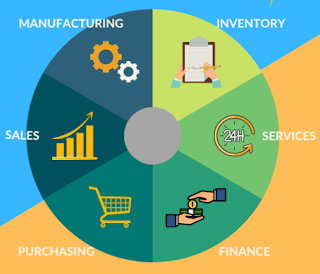
SAP boasts an extensive suite of modules, each tailored to specific business needs. Some of the key modules offered by SAP include:

FUNCTIONAL MODULES

Finance (FI): SAP FI module is designed to manage financial accounting tasks, such as general ledger, accounts payable, accounts receivable, asset accounting, and financial reporting.

Controlling (CO): The CO module complements the FI module by handling cost accounting, profitability analysis, internal orders, and other controlling functions to monitor and optimize costs.

Sales and Distribution (SD): SAP SD module facilitates sales processes, including order management, pricing, billing, shipping, and credit management.

Materials Management (MM): SAP MM module manages procurement and inventory processes, encompassing purchasing, material planning, stock management, and vendor evaluation.

Production Planning (PP): The PP module supports production planning and control, including demand forecasting, master production scheduling, and shop floor control.

Human Capital Management (HCM): SAP HCM module addresses human resource functions, such as payroll, personnel administration, time management, and talent development.

Customer Relationship Management (CRM): SAP CRM module focuses on managing customer relationships, sales, marketing, and customer service for better customer engagement.

Supplier Relationship Management (SRM): The SRM module streamlines procurement processes with suppliers, contract management, supplier evaluation, and supplier collaboration.

Business Intelligence (BI): SAP BI module enables data analysis and reporting, providing insights to make informed business decisions.

Supply Chain Management (SCM): SAP SCM module optimizes supply chain operations, encompassing demand planning, supply network planning, and logistics execution.

Quality Management (QM): The QM module ensures adherence to quality standards through quality planning, inspection, and control of goods and processes.

Plant Maintenance (PM): SAP PM module handles plant maintenance tasks, such as equipment management, maintenance planning, and work order processing.

Project System (PS): SAP PS module aids in project planning, execution, monitoring, and controlling, facilitating effective project management.

Governance, Risk, and Compliance (GRC): The GRC module assists in managing risk, compliance, and governance across the organization.

Environment, Health, and Safety (EHS): SAP EHS module focuses on environmental compliance, occupational health, and safety management.

TECHNICAL MODULES

Technical Modules:

ABAP (Advanced Business Application Programming)

Basis (System Administration)

SAP NetWeaver (Integration and Application Platform)

SAP Solution Manager (Application Lifecycle Management)

SAP Cloud Platform (PaaS for Developing Custom Applications)

SAP Data Services (Data Integration and Transformation)

SAP Fiori (User Experience and Design)

SAPUI5 (Web Development Toolkit for SAP Fiori)

SAP HANA (In-Memory Database and Platform)

The technical modules play a crucial role in supporting and maintaining the SAP system infrastructure, ensuring seamless integration, data management, and development of custom applications.

SAP modules offer a comprehensive suite of solutions to address various business functions, enabling organizations to integrate and optimize their operations. From functional modules that handle finance, sales, and supply chain to technical modules supporting development, data management, and user experience, SAP's ecosystem caters to diverse industry needs. By leveraging SAP's robust suite of modules, businesses can gain a competitive edge in the ever-evolving marketplace and embrace the full potential of SAP's intelligent ERP solution.


Read more →
What is Transaction Code (T-code) in SAP? A Comprehensive Guide

What is Transaction Code (T-code) in SAP? A Comprehensive Guide

23:31:00

In the world of SAP (Systems, Applications, and Products), transaction codes, commonly known as T-codes, play a crucial role in executing various business processes. For SAP users, T-codes act as shortcuts to access specific transactions or tasks within the system. In this blog, we will explore what T-codes are, their significance in SAP, how to find them, and why SAP relies on T-codes for seamless operations.


What is T-code Transaction Code?

A Transaction Code, often abbreviated as T-code, is an alphanumeric identifier used in SAP to accessspecific transactions or functions with just a few keystrokes. It serves as a shortcut that allows users to bypass complex navigation paths and directlyreach the desired functionality. T-codes streamline the user experience, saving time and effort in accessing various SAP processes.

What is the T-code in SAP?

In SAP, the T-code acts as a unique identifier for each transaction, report, or task that can be executed within the system. The code is composed of letters and numbers and is typically four or five characters long. For example, T-code "MM01" is used for creating a material master, and "VA01" is used to create a sales order. Each T-code is associated with a specific function or process, ensuring users can quickly access the relevant task without navigating through various menus.

How do I find the T-code in SAP?

Finding the right T-code is essential for efficient SAP navigation. Several methods can be employed to locate the desired T-code:

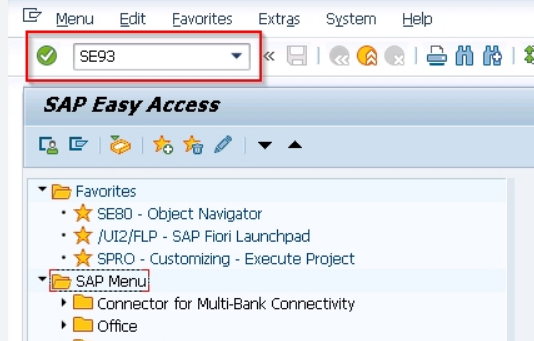
SAP Easy Access Screen: The SAP Easy Access screen is the primary entry point for most users. It displays a menu with various modules such as Finance (FI), Controlling (CO), Sales and Distribution (SD), Material Management (MM), and more. Users can explore the menu to find relevant transactions or simply enter a keyword in the search bar to view matching T-codes.

Using the "SE93" Transaction: The "SE93" transaction itself is used to manage transaction codes in SAP. By entering "SE93" in the command field and pressing Enter, users can access a screen where they can either view existing T-codes or create new ones. It also provides details about each T-code, including its description and associated program.

SAP Help Documentation: SAP offers extensive documentation, including online help and user guides. Users can refer to the SAP help portal or press "F1" on their keyboard while on a specific screen to access context-sensitive help. This resource can guide users to relevant T-codes and provide insights into their usage.

Favorites and Recently Used Transactions: SAP allows users to add frequently used T-codes to their favorites list. Additionally, users can find their recently executed transactions by clicking on the "Recent Transactions" option in the SAP menu.

Why does SAP use T-codes?

The implementation of T-codes in SAP offers several significant advantages that enhance user experience and system efficiency:

Enhanced User Productivity: T-codes provide a direct and efficient means of accessing specific transactions, enabling users to perform tasks swiftly. This streamlined approach reduces the time spent navigating through menus and screens, boosting overall productivity.

Consistency and Standardization: SAP T-codes follow a consistent naming convention, making it easier for users to identify and remember them. This standardization ensures a uniform approach across the organization, leading to reduced errors and better process control.

Simplified Training: SAP T-codes simplify the training process for new users. Instead of learning complex menu structures, employees can quickly grasp the relevant T-codes for their roles, enabling them to become proficient in specific tasks faster.

Transaction Authorization: SAP's access control is often based on T-codes, allowing organizations to manage user permissions at a granular level. Administrators can assign or restrict access to specific T-codes, ensuring data security and compliance.


Seamless System Navigation: In SAP ERP systems, which encompass a vast array of functionalities, finding the right task quickly is essential. T-codes offer a seamless navigation experience, even in complex and extensive SAP landscapes.


Let's take an example to understand the significance of T-codes better:

Imagine you are a procurement specialist in a large manufacturing company, responsible for creating purchase orders to procure raw materials. Without T-codes, the process would involve clicking through various SAP menu paths, such as Material Management (MM) -> Purchasing -> Purchase Order -> Create, and then specifying additional details like vendor information, material codes, quantities, and delivery dates.

However, with T-codes, this process becomes much more straightforward. You can use the T-code "ME21N," where "ME" indicates the Material Management module and "21" refers to the Purchase Order transaction. By entering "ME21N" in the SAP command field and hitting Enter, the purchase order creation screen opens directly, ready for you to input the required information. This saves valuable time and eliminates the need for extensive navigation, allowing you to focus on more critical tasks.

Furthermore, T-codes in SAP adhere to a consistent naming convention, making them intuitive and easy to remember. For instance, T-codes for material-related transactions often begin with "MM," while those for sales-related activities start with "VA."

Another significant advantage of T-codes is their role in enhancing security and access control. SAP administrators can assign specific T-codes to users based on their roles and responsibilities. This ensures that employees can only perform tasks relevant to their job functions, safeguarding sensitive data and preventing unauthorized actions.

In addition to these benefits, SAP users can create a personalized list of favorite T-codes, further expediting access to frequently used transactions. The system also keeps track of recently executed T-codes, enabling quick retrieval of past activities.

In conclusion, T-codes are a fundamental aspect of SAP's user interface design, driving efficiency and simplicity in the execution of tasks. By providing direct access to specific transactions, adhering to naming standards, and offering enhanced security features, T-codes significantly contribute to an optimized SAP experience. Whether you are a seasoned SAP professional or a new user, understanding and leveraging T-codes can greatly enhance your productivity and effectiveness within the SAP ecosystem.


Read more →
Unleashing the Power of SAP Annotations for Smart Tables

Unleashing the Power of SAP Annotations for Smart Tables

06:48:00

SAP annotations play a crucial role in enhancing the functionality and user experience of applications built on the SAP platform. In this blog, we will explore the significance of SAP annotations, specifically focusing on their application in Smart Tables. These annotations serve as essential metadata, enabling developers to define and modify the behavior of Smart Tables, making them more intelligent and user-friendly. Let's delve into the world of SAP annotations for Smart Tables and discover how they can elevate your application development process.


What are Common Metadata Annotations?

Metadata annotations are essential pieces of information embedded within the data structure that provide additional context and instructions. They help applications understand and interpret data effectively. Some common metadata annotations used in SAP are:


1. @OData.annotation: This annotation is used to specify the OData metadata extensions. It allows developers to add custom annotations to the OData service.

2. @UI: The @UI annotation is fundamental when dealing with user interfaces. It allows developers to influence the rendering and behavior of UI elements like Smart Tables.

3. @Common.Label: This annotation provides a human-readable label for the associated entity, property, or action, making it easier for users to understand the application's content.

4. @Capabilities: These annotations are used to expose additional capabilities of the data model, like sorting, filtering, and pagination.


What is Annotation in SAP OData?

In SAP, OData is a protocol used to expose data from various sources in a standardized way. Annotations in SAP OData are used to enrich the data model with additional metadata that goes beyond the basic schema definition. They are applied to entities, properties, and navigation properties, allowing developers to extend the behavior and rendering of these elements.


With annotations, developers can specify custom sorting orders, define navigation targets, set visibility conditions, and even implement data validations. In the context of Smart Tables, annotations enable developers to enhance the table's functionality and appearance without modifying the underlying data model.


The Purpose of UI Annotations in CDS View:

Core Data Services (CDS) is a modeling technique in SAP that allows developers to define semantically rich data models. Within CDS views, UI annotations are used to influence the rendering and behavior of user interfaces, including Smart Tables.


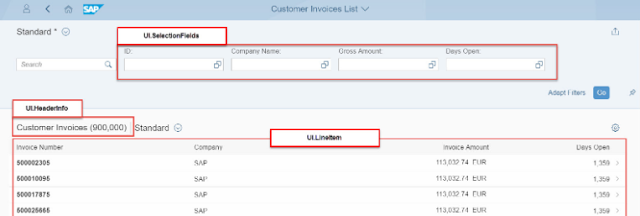
1. @UI.lineItem: This annotation is used to specify which fields should be displayed as line items in the Smart Table, providing a concise overview of the data.

2. @UI.selectionField: Developers use this annotation to mark fields as selection fields, which enables users to filter data based on those fields within the Smart Table.

3. @UI.facet: This annotation is used to group related fields together within the Smart Table, organizing the data in a meaningful way.

4. @UI.filterField: By using this annotation, developers can enable filtering on specific fields, enhancing data exploration capabilities for end-users.


Examples of SAP Annotations in Smart Tables:

Let's explore some practical examples of how SAP annotations can be applied to Smart Tables to enhance their functionality:

1. Custom Sorting: Assume we have a Smart Table displaying sales data with various columns, including "Revenue" and "Profit." By applying the @Capabilities.SortRestrictions annotation, developers can allow users to sort the table data based on these columns in ascending or descending order.

2. Conditional Formatting: With the @UI.dataPoint annotation, developers can apply conditional formatting to the "Revenue" field, highlighting it in red if it falls below a predefined threshold, drawing immediate attention to potential issues.

3. Navigation Targets: By utilizing the @UI.lineItem and @UI.identification annotations, developers can specify which fields serve as navigation targets, enabling users to navigate to related entities or detail pages directly from the Smart Table.


SAP annotations for Smart Tables open up a world of possibilities in terms of customizing and enriching the user experience. From defining custom sorting to enabling filtering and navigation, annotations empower developers to craft highly interactive and intelligent applications. By embracing the power of annotations, developers can create applications that not only meet business requirements but also delight end-users with a seamless and intuitive experience. So, why wait? Dive into the realm of SAP annotations and elevate your Smart Tables to the next level!

Read more →
Sap Rap Interview questions Part 4

Sap Rap Interview questions Part 4

02:06:00

In this blog, I have listed most common and latest interview questions related to SAP RAP ABAP. I have divided these into multiple parts: 


  76. How do you handle optimistic locking conflicts in SAP RAP when saving draft changes?

Optimistic locking conflicts in SAP RAP are handled automatically during the save process. When a conflict occurs, the framework detects the changes made by other users and prompts the current user to resolve the conflict before proceeding with the save.

77. What is the purpose of the @ObjectModel.virtualRoot annotation in SAP RAP?

The @ObjectModel.virtualRoot annotation is used to define a virtual root entity in a BOPF object. It allows developers to include additional context data or behavior in the root entity without directly modifying the actual database tables.

78. How do you handle data validation for specific fields based on user input in SAP RAP applications?

Data validation for specific fields can be implemented using the BOPF validation framework, which allows developers to define custom validation rules based on user input and entity data.

79. Can you explain the use of the @DefaultAggregation annotation in SAP RAP CDS views?

The @DefaultAggregation annotation allows you to define default aggregations (e.g., SUM, AVERAGE, MAX) for specific fields in CDS views, making it easier to calculate aggregated values in analytical queries.

80. How do you handle custom error messages and error handling in SAP RAP applications?

Custom error messages can be defined and raised using BOPF error handling classes. Developers can handle errors based on specific conditions or error types to provide more informative feedback to end-users.

81. What is the role of SAP RAP Business Object Generator (BOB)?

The SAP RAP Business Object Generator (BOB) is a tool that automates the creation of BOPF objects and corresponding CDS views from a data model defined in a Data Definition Language (DDL) file.

82. Can you explain the concept of binding switch in SAP RAP?

Binding switch allows developers to control the behavior of an association at runtime, enabling dynamic association resolutions based on specific conditions.

83. How do you handle soft and hard deletes in SAP RAP applications?

Soft deletes can be implemented using draft handling, allowing users to deactivate entities without permanently deleting them. Hard deletes can be executed manually or using custom logic when necessary.

84. What are the key steps involved in upgrading SAP RAP applications to newer versions or releases?

The key steps involve analyzing the changes introduced in the new version, adapting custom code and behavior, adjusting data models, and thoroughly testing the upgraded application.

85. How do you handle concurrency conflicts when multiple users are editing the same draft in SAP RAP applications?

Concurrency conflicts are detected and managed automatically during the save process. The framework compares the draft data with the active version to ensure consistency and avoid data inconsistencies.

86. How do you handle mass data operations like data imports and exports in SAP RAP applications?
Mass data operations can be handled using SAP Data Services, Data Migration Cockpit (DMC), or custom programs to handle data imports and exports efficiently.

87. Can you explain the concept of event publishing and event consumption in SAP RAP?
Event publishing allows an application to trigger events that other components or applications can listen to and respond to (event consumption). This enables decoupled communication between different parts of the application.

88. How do you implement authorization checks for custom actions in SAP RAP applications?
Authorization checks for custom actions can be performed by implementing custom authorization classes that are triggered when the action is executed.

89. What are the best practices for implementing error handling and logging in SAP RAP applications?
Best practices include using structured exception classes, logging frameworks like SLG1, and providing meaningful error messages to guide users on what went wrong.

90. How do you implement custom authorization logic based on field-level security in SAP RAP applications?
Field-level security can be implemented using CDS authorization annotations (@AccessControl) and custom authorization classes to control which fields users can access based on their roles and authorizations.

91. What are the considerations for building SAP RAP applications that support multiple backend database platforms?
When building applications for multiple backend database platforms, it is crucial to consider database-specific SQL constructs and ensure that your data model is compatible with all targeted databases.

92. How do you handle attachments and document management in SAP RAP applications?
Attachments and document management can be handled using SAP Document Management System (DMS) or other external content repositories to store and manage documents associated with entities.

93. Can you explain the use of BOPF qualifiers and contexts in SAP RAP?
BOPF qualifiers allow you to differentiate between multiple instances of the same BOPF object in different contexts. Contexts are used to manage different variations or scenarios of the same business object.

94. How do you perform data migration when transitioning from traditional SAP ECC to SAP S/4HANA with SAP RAP?
Data migration from SAP ECC to SAP S/4HANA with SAP RAP can be done using SAP Data Services, SAP S/4HANA Migration Cockpit, or other migration tools.

95. What are the best practices for ensuring the security of SAP RAP applications?
Best practices include implementing proper authorizations, securing communication channels with SSL, implementing input validation, and using secure coding practices.

96. How do you handle data synchronization between different SAP RAP applications or systems?
Data synchronization between SAP RAP applications or systems can be achieved through integration scenarios using OData services, RFCs, or other middleware technologies like SAP Cloud Platform Integration.
97. Can you explain the role of Business Rules Framework plus (BRFplus) in SAP RAP applications?
BRFplus is a rule-based framework that allows developers to define and manage business rules independently from the application code. It can be used in SAP RAP applications to implement complex business logic and decision-making.
98. How do you manage the transport of SAP RAP applications between different systems?
SAP RAP applications can be transported using standard SAP transport requests, which include the relevant CDS views, BOPF objects, behavior definitions, and other relevant artifacts.
99. What are the considerations for performance optimization when using SAP RAP applications on SAP HANA?
To optimize performance on SAP HANA, consider leveraging HANA-specific features like CDS table functions, using native SQL views, and minimizing round trips to the database.
100. How do you handle integration with non-SAP systems in SAP RAP applications?
Integration with non-SAP systems can be achieved using RESTful APIs, JSON, or other standard communication protocols. SAP Gateway can act as the mediator for integration with external systems.

Read more →
Sap Rap Interview questions Part 3

Sap Rap Interview questions Part 3

02:04:00

 In this blog, I have listed most common and latest interview questions related to SAP RAP ABAP. I have divided these into multiple parts: 


51. How do you manage performance issues in SAP RAP applications with large datasets?

Performance can be optimized by using efficient database indexes, limiting the data retrieved using pagination, and leveraging caching mechanisms to reduce database hits.

52. Can you explain the role of SAP Gateway in SAP RAP applications?

SAP Gateway acts as a mediator between the front-end applications and SAP RAP services, exposing the OData services to external systems or SAP Fiori applications.

53. How do you handle data migration and data conversion in SAP RAP projects?

Data migration and data conversion can be performed using SAP Data Services or SAP LSMW (Legacy System Migration Workbench) to transfer data from legacy systems to SAP RAP applications.

54. What is the difference between SAP RAP and SAP UI5/OpenUI5?

SAP RAP is a back-end framework for building business applications, while SAP UI5/OpenUI5 is a front-end framework used to develop user interfaces for SAP applications.

55. How do you ensure data consistency across different systems when integrating SAP RAP with external systems?

Data consistency can be ensured by implementing transactional behavior in the integrated systems and using standard protocols and middleware for data synchronization.

56. How do you handle localization of data in SAP RAP applications when dealing with multiple languages?

Localization of data in SAP RAP applications can be achieved using the Internationalization (i18n) capabilities of SAP Fiori Elements. This allows data to be displayed in the user’s preferred language based on their settings.

57. Can you explain the concept of data redefinition in SAP RAP?

Data redefinition allows developers to override certain attributes of an entity in specific contexts, enabling customized behavior without modifying the original data model.

58. What are the different ways to handle errors in SAP RAP applications?

Errors in SAP RAP applications can be managed by using the BOPF error handling framework, which provides options for handling validation errors, side effect errors, and other exceptions.

59. How do you perform testing of SAP RAP applications?

Testing of SAP RAP applications can be done using ABAP Unit test classes and BOPF-specific test classes. This allows developers to verify the behavior and correctness of the business objects.

60. What are the considerations for data migration when transitioning from traditional ABAP development to SAP RAP?

When migrating to SAP RAP, you need to consider data mapping between legacy ABAP structures and CDS views, data cleansing, and ensuring data compatibility with the new data model.

61. Can you explain the concept of transient providers in SAP RAP?

Transient providers are used to add additional fields to an entity without changing the underlying data model. They provide a way to enhance an entity dynamically.

62. How do you handle data archiving and retention in SAP RAP applications?

Data archiving and retention in SAP RAP can be achieved using standard SAP archiving functionalities or by implementing custom archiving and retention policies based on business requirements.

63. What are the performance implications of using calculated fields in SAP RAP CDS views?

Calculated fields in CDS views can impact performance, especially when dealing with large datasets. It’s essential to optimize the calculations and use caching mechanisms to improve performance.

64. How do you manage data consistency when performing complex operations involving multiple BOPF objects and associations?

Data consistency can be ensured by implementing comprehensive validations and side effects across the involved BOPF objects to maintain the integrity of the data.

65. Can you explain the purpose of using the @ObjectModel.create annotation in SAP RAP?

The @ObjectModel.create annotation specifies the creation behavior of an entity. It determines which attributes should be set when creating a new instance of the entity.

66. What is the difference between draft enabled and draft aware CDS views in SAP RAP?

Draft enabled CDS views define the data structure for draft-enabled entities, while draft aware CDS views allow you to consume draft data together with active data without directly modifying it.

67. How do you handle cascading deletions in SAP RAP when deleting an entity with associations?

Cascading deletions can be managed through custom logic in the behavior definition of the BOPF object. You can implement pre- or post-exit checks to control the deletion of associated entities.

68. Can you explain the use of associations with qualifiers in SAP RAP?

Associations with qualifiers enable you to define multiple associations between the same two entities, allowing you to differentiate and use them in different contexts.

69. What is the purpose of using the @Common.Filter annotation in SAP RAP CDS views?

The @Common.Filter annotation allows you to define default filter values for specific fields in a CDS view, simplifying the filtering of data when consuming the OData service.

70. How do you implement custom search logic for SAP RAP applications?

Custom search logic can be implemented by using the @Search.implementedBy annotation to specify a custom search class that performs the search based on specific requirements.

71. Can you explain the concept of key mapping in SAP RAP?

Key mapping allows you to map the keys of two related entities when they have different key structures but represent the same business object, making it easier to handle associations.

72. How do you handle deep insert operations in SAP RAP when creating entities with associations?

Deep insert operations can be handled by implementing the corresponding create methods in the BOPF object, which manage the creation of associated entities along with the main entity.

73. What are the considerations for performance tuning when using draft handling in SAP RAP?

To improve performance when using draft handling, consider using appropriate buffer sizes, avoiding unnecessary draft processing, and using client-side validation to reduce round trips to the server.

74. How do you ensure data integrity when working with associations in SAP RAP?

Data integrity is ensured by implementing validations and referential integrity checks in the behavior definition and using the built-in association validation annotations.

75. Can you explain the concept of an event handler in SAP RAP?

An event handler is a method that reacts to specific events during the lifecycle of an entity. It is implemented in the BOPF object and is used to execute custom logic in response to events.


Read more →
Sap Rap Interview questions Part 2

Sap Rap Interview questions Part 2

01:59:00

In this blog, I have listed most common and latest interview questions related to SAP RAP ABAP. I have divided these into multiple parts: 

26. Can you explain the concept of BOPF runtime artifacts in SAP RAP?

BOPF runtime artifacts consist of generated classes and methods that handle various aspects of the business object’s behavior, such as processing, validation, and determination resolution.

27. How can you handle localization in SAP RAP applications?

Localization in SAP RAP can be achieved using internationalization (i18n) files to provide translations for UI texts and labels.

28. What are the different types of determinations in SAP RAP?

SAP RAP supports three types of determinations: determination of initial values, determination of default values, and determination of computed values.

29. How do you handle transient fields in SAP RAP?

Transient fields are fields that are not persisted in the database but are required for some calculations or temporary purposes. They can be defined using the @ObjectModel.transient annotation in CDS views.

30. What is the purpose of using analytical queries in SAP RAP?

Analytical queries are used to define calculated measures or dimensions in CDS views, allowing developers to build analytical applications with aggregated data.

31. How do you implement full-text search in SAP RAP applications?

Full-text search can be implemented using the @Search.searchable annotation in CDS views, enabling users to search for specific text values across entities.

32. Explain the concept of Side-by-Side extensibility in SAP RAP.

Side-by-Side extensibility allows developers to extend the standard SAP RAP applications with custom fields, logic, or user interfaces without modifying the core application.

33. Can you use SAP RAP to build mobile applications?

Yes, SAP RAP applications can be designed to be mobile-friendly and can be accessed on mobile devices through SAP Fiori launchpad or mobile apps.

34. How do you handle concurrency conflicts in SAP RAP?

Concurrency conflicts are automatically handled during draft processing in SAP RAP by comparing the draft data with the active version and managing the conflict resolution.

35. What are the best practices for performance optimization in SAP RAP applications?

Performance optimization can be achieved by designing efficient CDS views, leveraging caching mechanisms, and avoiding unnecessary database operations.


36. How can you handle data restrictions and authorization checks for specific user groups in SAP RAP?

Data restrictions and authorization checks for specific user groups can be implemented using CDS authorization annotations (@AccessControl) along with custom logic based on user roles and attributes.

37. Can you integrate SAP RAP applications with other SAP technologies like SAP Cloud Platform or SAP S/4HANA?

Yes, SAP RAP applications can be integrated with other SAP technologies through OData services, RFCs (Remote Function Calls), or SAP Cloud Platform integration services.

38. What is the purpose of using side effects in SAP RAP?

Side effects are used to trigger additional actions or validations during the processing of an entity, ensuring consistent data modifications.

39. How do you handle versioning and data consistency in SAP RAP applications?

Versioning and data consistency are managed automatically by SAP RAP when draft handling is enabled. Changes in draft entities are isolated until they are committed, ensuring data integrity.

40. Explain the concept of BOPF actions and how they are used in SAP RAP.

BOPF actions represent operations that can be executed on business objects, such as creating, updating, or deleting entities. They are implemented as methods in the BOPF object and can be triggered from the UI.

41. How do you handle complex UI requirements in SAP RAP applications?

Complex UI requirements can be addressed using SAP Fiori Elements, which provide pre-built UI elements and templates for various use cases, simplifying the UI development process.

42. What are the different types of annotations available in SAP RAP CDS views?

SAP RAP CDS views support a wide range of annotations, including those for behavior definitions, draft handling, search, data validation, and service definition.

43. Can you explain the concept of draft patterns in SAP RAP?

Draft patterns are reusable configurations that define the behavior of drafts in a standardized way, making it easier to implement consistent draft handling across multiple entities.

44. How do you ensure data security and encryption in SAP RAP applications?

Data security and encryption can be implemented through standard SAP security mechanisms, such as authorizations, SSL communication, and data encryption methods.

45. What are the best practices for error handling and logging in SAP RAP applications?

Error handling and logging can be achieved by using BOPF error handling classes, logging frameworks, and proper exception handling to ensure comprehensive error reporting.


46. How do you handle complex business scenarios involving multiple BOPF objects in SAP RAP?

Complex business scenarios can be addressed by implementing multiple BOPF objects and defining appropriate relationships and interactions between them using associations and determinations.

47. What are the different types of validations you can perform in SAP RAP?

SAP RAP supports three types of validations: entity validations, association validations, and value validations. Entity validations ensure data integrity within an entity, association validations maintain data consistency across associations, and value validations enforce specific value constraints.

48. Can you explain the use of annotations like @ObjectModel.write and @ObjectModel.read in SAP RAP?

The @ObjectModel.write annotation indicates that a specific field can be updated, while the @ObjectModel.read annotation indicates that a field can be read. These annotations help control data access and visibility.

49. How do you handle data access restrictions for different user roles in SAP RAP?

Data access restrictions can be implemented using CDS authorization annotations (@AccessControl) and custom logic based on user roles, authorizations, or other attributes.

50. What is the purpose of using draft contexts in SAP RAP?

Draft contexts are used to manage the lifecycle of draft entities, allowing developers to perform specific actions before and after the save process, like validations and side effect execution.

Read more →
Sap Rap Interview questions Part 1

Sap Rap Interview questions Part 1

01:57:00

In this blog, I have listed most common and latest interview questions related to SAP RAP ABAP. I have divided these into multiple parts: 


1. What is SAP RAP ABAP?

SAP RAP (Rapid Application Development) ABAP is a framework that enables developers to create Fiori applications quickly and efficiently using the ABAP programming language.

2. What are the key features of SAP RAP?

Some key features include easy-to-use data modeling, built-in CRUD operations, and support for associations and validations.

3. How do you define a data model in SAP RAP?

Data models in SAP RAP are defined using Core Data Services (CDS) views, which allow developers to create data structures and associations.

4. Explain the difference between BOPF (Business Object Processing Framework) and RAP.

BOPF is a framework for building complex business objects, while RAP is focused on building Fiori applications rapidly with simpler data models.

5. How do you handle associations in SAP RAP?

Associations in SAP RAP are handled through annotations or associations in the CDS view. They allow developers to define relationships between different entities.

6. What are the different types of associations in SAP RAP?

SAP RAP supports three types of associations:

• To-One association: Links one entity to exactly one related entity.

• To-Many association: Links one entity to multiple related entities.

• Composition association: Represents a strong relationship where the lifecycle of the child entity is dependent on the parent entity.

7. How do you perform data validation in SAP RAP?

Data validation in SAP RAP can be done using the BOPF framework by implementing validation classes or by using annotations in CDS views.

8. Explain the role of behavior definitions in SAP RAP.

Behavior definitions define the behavior of a business object in terms of allowed actions, events, and determinations. They specify the application logic and define how the business object behaves.

9. What is the purpose of RAP services in SAP?

RAP services provide reusable business logic and operations for RAP applications. They enable developers to centralize common functionalities like authorization checks, access control, and draft handling.

10. How do you enable draft handling in SAP RAP?

Draft handling is enabled by setting the @ObjectModel.draft.enabled annotation in the CDS view definition. This allows users to create and edit draft versions of an entity before saving the changes.

11. What is a key user in SAP RAP and what are their responsibilities?

A key user is a business expert who is involved in the configuration and adaptation of SAP RAP applications. Their responsibilities include customizing application behavior, defining data restrictions, and adapting user interfaces.

12. How do you handle authorization checks in SAP RAP?

Authorization checks can be implemented in RAP using the BOPF framework. Developers can define authorization checks based on user roles and other criteria to restrict access to specific data or operations.

13. Explain the concept of service binding in SAP RAP.

Service binding is the process of linking the data model defined in the CDS view to the behavior model defined in the BOPF object. It connects the front-end UI with the back-end business logic.

14. Can you use RAP to expose OData services?

Yes, SAP RAP applications can expose OData services, which allows them to interact with other systems or be consumed by external applications.

15. How do you handle error handling and messages in SAP RAP?

Error handling and messages can be implemented using the BOPF framework. Developers can define error messages and handle exceptions to ensure proper data validation and processing.


16. What is the purpose of using RAP annotations in CDS views?

RAP annotations enhance the CDS view with additional behavior and metadata information. They play a crucial role in defining associations, actions, and draft behavior.

17. How do you handle optimistic locking in SAP RAP?

Optimistic locking in SAP RAP is automatically handled when draft handling is enabled. It ensures that concurrent changes to the same data are detected and managed appropriately during the save process.

18. Explain the concept of determinations in SAP RAP.

Determinations define the process of how values for specific fields are calculated during the lifecycle of an entity. They help automate the derivation of values based on certain conditions.

19. How can you handle validation messages in SAP RAP?

Validation messages in SAP RAP are managed through BOPF. Developers can implement validation classes or rules to check the data integrity and display corresponding messages to the user.

20. What is the difference between managed and unmanaged associations in SAP RAP?

Managed associations are automatically handled by the framework, whereas unmanaged associations require manual implementation in the business logic.

21. How do you handle authorization checks at the service level in SAP RAP?

Authorization checks at the service level can be implemented by using CDS authorization annotations (@AccessControl) and custom logic to control data access based on the user’s authorizations.

22. What is a BOPF object and how is it related to SAP RAP?

A BOPF object is a central concept in the Business Object Processing Framework (BOPF). It defines the data model, behavior, and life cycle of an entity, and SAP RAP leverages BOPF objects to build applications.

23. Can you consume SAP RAP services in SAP Fiori Elements applications?

Yes, SAP RAP services can be consumed in SAP Fiori Elements applications using annotations and the OData service layer.

24. How do you handle authorization checks for draft documents in SAP RAP?

Authorization checks for draft documents can be implemented by defining custom authorization classes in BOPF and specifying the authorization checks based on draft status and user roles.

25. What are the steps involved in creating a new SAP RAP application from scratch?

The steps include defining the CDS data model, creating BOPF objects, defining behavior definitions, setting up service bindings, handling validations and authorization checks, and implementing the user interfaces.


Read more →
Sap Abap on Hana most common and latest interview questions -  Part 4

Sap Abap on Hana most common and latest interview questions - Part 4

07:56:00

In this blog, I have listed most common and latest interview questions related to SAP ABAP on Hana. I have divided these into multiple parts: 


 59. What is the purpose of the ABAP Development Tools (ADT) in ABAP on HANA?

   Answer: The ABAP Development Tools (ADT) provide an integrated development environment for ABAP on HANA, offering features such as code editors, debugging tools, and project management capabilities.


60. How do you leverage the parallel processing capabilities in ABAP on HANA?

   Answer: In ABAP on HANA, parallel processing can be achieved using techniques like parallel cursor or parallel processing frameworks such as the Parallel Cursor (PC) and SAP HANA Application Function Modeler (AFM).


61. What is the purpose of the SQL Performance Trace in ABAP on HANA?

   Answer: The SQL Performance Trace (transaction ST05) allows you to trace and analyze the SQL statements executed during program execution, providing insights into their performance and resource usage.


62. How do you optimize data access in ABAP on HANA?

   Answer: Data access in ABAP on HANA can be optimized by using appropriate SQL statements, filtering data at the database layer, minimizing data transfers, and leveraging advanced features like CDS views and AMDP.


63. How do you handle SAP HANA-specific data types in ABAP on HANA?

   Answer: SAP HANA-specific data types in ABAP on HANA can be handled using the respective ABAP data types that are compatible with SAP HANA, such as HANA-specific date/time types or table types.


64. What is the purpose of the Code-to-Data paradigm in ABAP on HANA?

   Answer: The Code-to-Data paradigm in ABAP on HANA aims to minimize data transfers between the application layer and the database layer by executing computations and data processing directly in the database using AMDP and CDS views.


65. How do you handle data consistency in ABAP on HANA?

   Answer: Data consistency in ABAP on HANA can be maintained through proper transaction handling, implementing appropriate locking mechanisms, and using the transactional capabilities provided by the SAP HANA database.


66. What is the role of the SQL Performance Analyzer (SPA) in ABAP on HANA?

   Answer: The SQL Performance Analyzer (transaction ST04) in ABAP on HANA allows you to analyze and optimize the performance of SQL statements executed in ABAP programs, identifying potential performance bottlenecks.


67. How do you leverage the SQLScript capabilities in ABAP on HANA?

   Answer: SQLScript in ABAP on HANA allows developers to write advanced database procedures and algorithms directly in the database layer, leveraging the optimized execution capabilities of SAP HANA.


68. What is the purpose of the HANA Database Interface (HDBI) in ABAP on HANA?

   Answer: The HANA Database Interface (HDBI) in ABAP on HANA provides a set of APIs and libraries that allow ABAP programs to establish connections, execute SQL statements, and interact with the SAP HANA database.


69. How do you handle data security in ABAP on HANA?

   Answer: Data security in ABAP on HANA can be ensured by implementing appropriate authorization checks, role-based access controls, and encryption mechanisms to protect sensitive data.


70. What is the role of SAP HANA Extended Application Services (XS) in ABAP on HANA?

   Answer: SAP HANA Extended Application Services (XS) provides a platform for developing and deploying web-based applications on the SAP HANA database, enabling the integration of ABAP applications with modern web technologies.


71. How do you perform code pushdown in ABAP on HANA?

   Answer: Code pushdown in ABAP on HANA involves moving data-intensive processing and calculations from the application layer to the database layer, utilizing features like AMDP, CDS views, and SQLScript.


72. What is the purpose of the SQL Performance Analyzer (SPA) in ABAP on HANA?

   Answer: The SQL Performance Analyzer (transaction ST04) in ABAP on HANA allows you to analyze and optimize the performance of SQL statements executed in ABAP programs, identifying potential performance bottlenecks.


73. How do you leverage the SQLScript capabilities in ABAP on HANA?

   Answer: SQLScript in ABAP on HANA allows developers to write advanced database procedures and algorithms directly in the database layer, leveraging the optimized execution capabilities of SAP HANA.


74. What is the purpose of the HANA Database Interface (HDBI) in ABAP on HANA?

   Answer: The HANA Database Interface (HDBI) in ABAP on HANA provides a set of APIs and libraries that allow ABAP programs to establish connections, execute SQL statements, and interact with the SAP HANA database.


75. How do you handle data security in ABAP on HANA?

   Answer: Data security in ABAP on HANA can be ensured by implementing appropriate authorization checks, role-based access controls, and encryption mechanisms to protect sensitive data.


76. What is the role of SAP HANA Extended Application Services (XS) in ABAP on HANA?

   Answer: SAP HANA Extended Application Services (XS) provides a platform for developing and deploying web-based applications on the SAP HANA database, enabling the integration of ABAP applications with modern web technologies.


77. How do you perform code pushdown in ABAP on HANA?

   Answer: Code pushdown in ABAP on HANA involves moving data-intensive processing and calculations from the application layer to the database layer, utilizing features like AMDP, CDS views, and SQLScript.


78. What is the purpose of the SQL Performance Monitor in ABAP on HANA?

   Answer: The SQL Performance Monitor (transaction ST03) allows you to monitor and analyze the performance of SQL statements executed in ABAP programs, helping identify and resolve performance bottlenecks.


79. How do you handle data replication in ABAP on HANA?

   Answer: Data replication in ABAP on HANA can be achieved using tools like SAP Landscape Transformation (SLT), SAP Data Services, or custom ABAP programs to replicate and synchronize data between different systems or databases.


80. What is the purpose of the ABAP Database Connectivity (ADBC) framework in ABAP on HANA?

   Answer: The ADBC framework in ABAP on H ANA provides a standardized interface for executing SQL statements and accessing database-specific features directly in ABAP code, ensuring efficient and optimized data access.

Read more →